
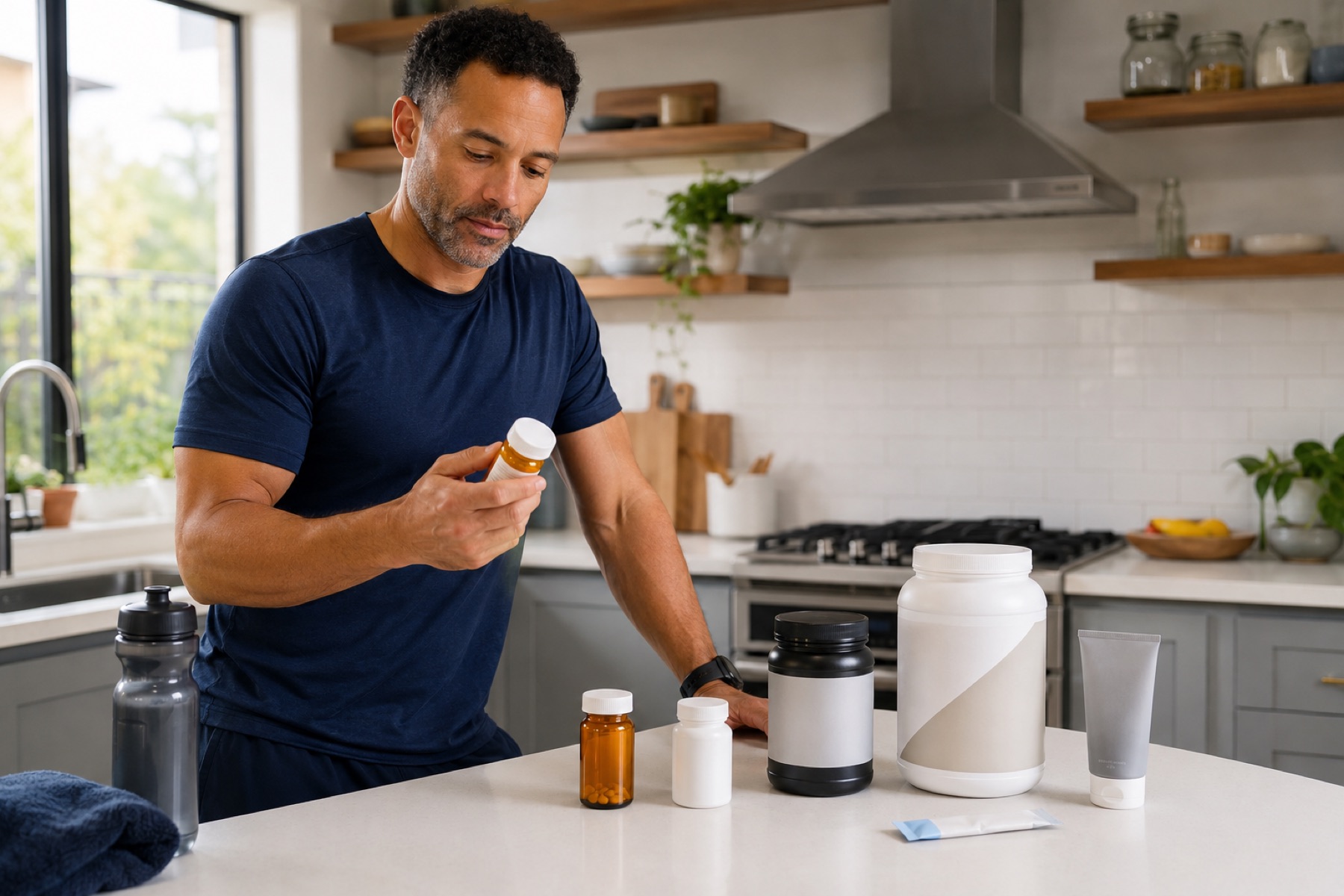
Start before the label
What problem are you asking this product to solve?
The best supplement review starts before the ingredient list. Are you trying to correct a documented deficiency, fill a nutrition gap, improve convenience, manage a symptom or chase a performance promise? Different goals require different evidence—and sometimes the right answer is food, training, sleep, medical evaluation or no added product at all.
FDA regulates dietary supplements differently from medicines. Companies are responsible for product safety and labeling, while FDA’s oversight generally becomes more active after products reach the market. That makes careful selection and professional review especially important.
The six-part supplement review
Need
What specific goal does it serve? Is there evidence of a deficiency, a realistic benefit or a gap that cannot be addressed more directly?
Evidence
Was the ingredient—not merely a proprietary blend—studied for people like you, at a comparable dose, for the outcome being promised?
Ingredient clarity
Can you identify every active ingredient and amount? Be cautious with vague blends, multiple names for the same substance and stimulant-heavy products.
Dose + duration
More is not automatically better. Compare the labeled dose with the evidence and consider how long the product is intended to be used.
Overlap + interactions
Pre-workout, hydration mixes, multivitamins and recovery products can repeat ingredients. Supplements may also interact with medicines or affect lab tests.
Quality + sport risk
Independent certification can reduce—not eliminate—risk. Competitive athletes must also consider prohibited-substance and contamination concerns.
The five-question supplement checkpoint
Can you answer all five?
What third-party certification can—and cannot—tell you
| It may help verify | It does not prove |
|---|---|
| The tested product met that program’s standards at the time of certification. | That the supplement is necessary for you. |
| Label accuracy or screening for substances covered by the certifier. | That the product will improve performance. |
| A lower contamination or prohibited-substance risk than an uncertified alternative. | That every possible ingredient or sport risk has been eliminated. |
A seal is one checkpoint—not the entire decision.
For competitive athletes, USADA recommends reducing supplement risk by choosing products certified through a third-party program that tests for substances prohibited in sport. No organization can guarantee a supplement is completely risk-free.
Claims that deserve a slower look
- “FDA approved” on a dietary supplement.
- Promises to treat, cure or replace prescription care.
- “Proprietary blends” that hide individual ingredient amounts.
- Extreme promises such as rapid fat loss, hormone optimization or drug-like muscle gain.
- Testimonials presented as if they were clinical evidence.
- A long ingredient list that makes interactions and duplication difficult to identify.
Bring this information to a pharmacist
Photograph the front label, Supplement Facts panel, complete ingredient list, lot number and certification mark. Include how often you plan to use it, your goal, every medicine and supplement you already take, and any competition rules that apply.
Do not forget food-shaped supplements.
Energy drinks, protein powders, hydration mixes, gummies, gels and pre-workout powders may still contain concentrated ingredients that affect total intake, interactions or sport risk.