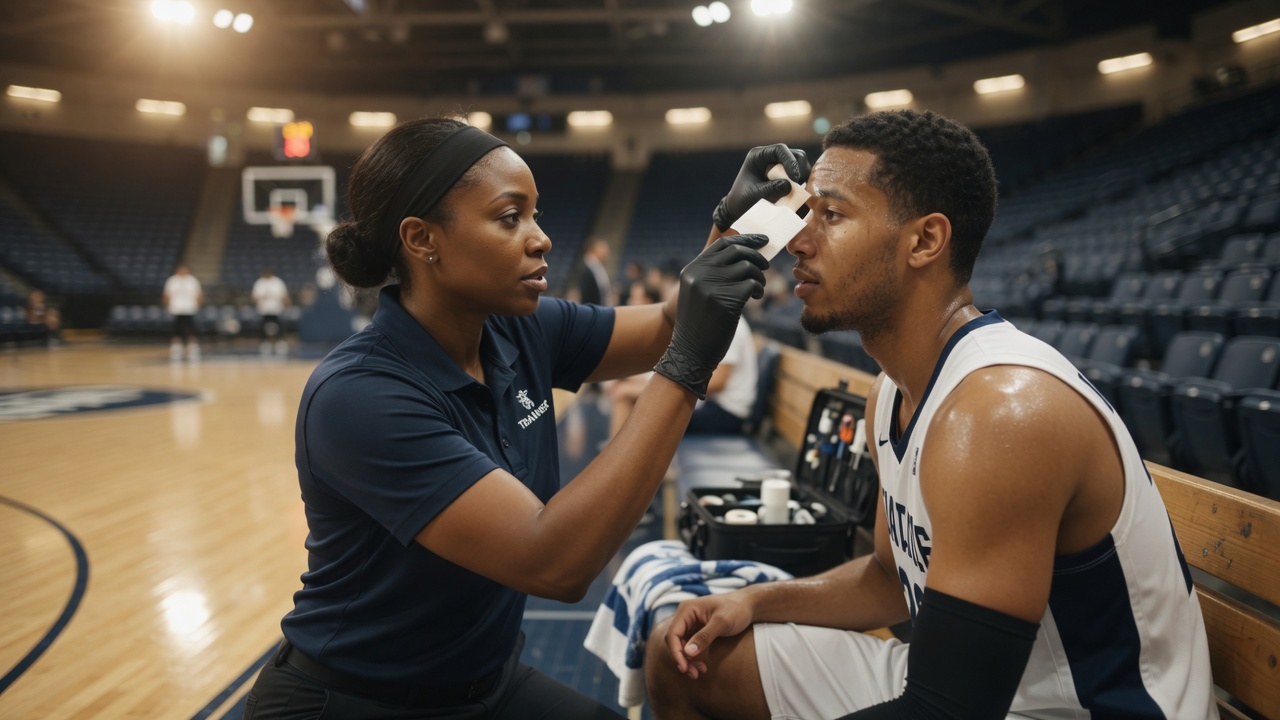
Key Takeaways
- Cuts and facial lacerations are common injuries in high-contact sports such as basketball and hockey.
- About 1 in 8 NBA players get a facial injury each season, and facial cuts are still some of the most common injuries treated in the NHL.
- Facial wounds tend to bleed heavily because the face has many blood vessels, so they require prompt attention and care.
- Quick wound care keeps athletes safe, lowers the risk of infection, and helps them spend less time out of the game.
- Rammer’s Cut Cream uses phenylephrine, lidocaine, and bacitracin to help stop bleeding, ease pain, and prevent bacteria in minor cuts and lacerations.
A Hidden Challenge of Contact Sports
In fast-paced, physical sports like basketball and hockey, injuries are bound to happen.
Facial lacerations and soft tissue injuries are quite common in the NBA, accounting for roughly one-third of all facial trauma sustained by players. One study reported that 1 in 8 NBA players experience some form of facial injury each season, with accidental contact from elbows, collisions, and rebounding battles among the leading causes.
Similarly, facial lacerations are one of the most common injuries in the NHL, occurring at a rate of approximately 4.1 to 5.0 per 1,000 player-games.
What is Rammer’s Cut Cream, and how do its ingredients work together?
- Phenylephrine is a vasoconstrictor that narrows blood vessels at the injury site, reducing localized bleeding and improving visibility for wound assessment.
- Lidocaine is a local anesthetic that numbs the affected area, allowing the wound to be cleaned and treated with greater comfort for the athlete.
- Bacitracin is a topical antibiotic that protects the wound from bacterial contamination — important where sweat, equipment and close contact increase exposure.
Why do facial cuts bleed so much?
The face has an exceptionally rich network of small blood vessels just beneath the skin's surface. Even a minor cut can result in surprisingly heavy bleeding compared to injuries elsewhere on the body, and the bleeding can quickly obscure vision.
Professional leagues maintain strict protocols regarding bleeding injuries: athletes with active bleeding or visible blood on their body, uniform, or equipment must leave the playing area until the bleeding is controlled and the wound is properly treated and covered.
When does a cut need stitches or more medical care?
A small, shallow cut that stops bleeding quickly and has wound edges that stay together can often be treated with a topical product. A player might need stitches or more medical help if the bleeding does not stop, the cut is deep, the wound is wide open, or you can see fat or muscle. Cuts near sensitive areas like the eye need extra care and should be checked by a doctor right away.
Be Ready Before the Injury Happens
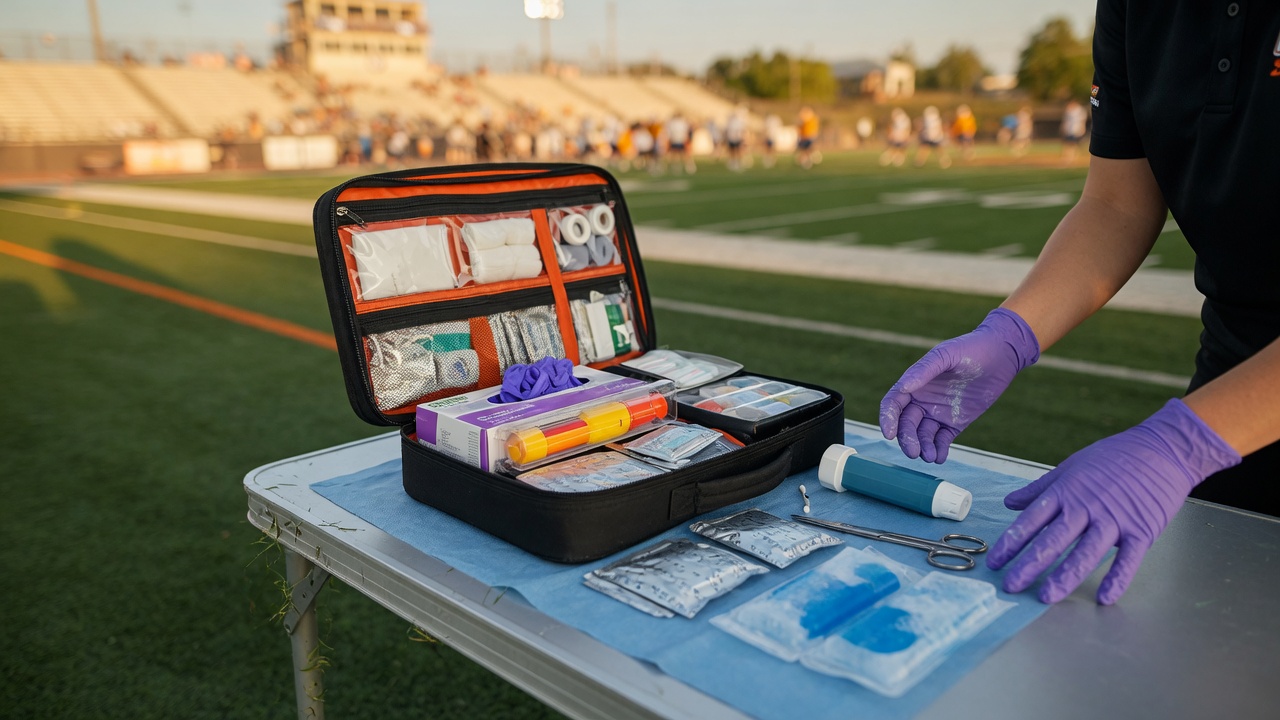
For athletic trainers and sports medicine staff, being ready before an injury happens is just as important as treating it. SportPharm offers emergency medications and sports medicine products to help athletic trainers, team doctors, and sports medicine staff stay ready. Contact SportPharm at info@sportpharm.com.
Be ready for what the game brings
SportPharm helps athletic trainers build sideline-ready kits and compliant medication supplies.
Talk to a SportPharm pharmacist