If you watched the 2026 World Cup, you might have seen Canadian international Ismaël Koné suffer a serious broken tibia/fibula injury. As he was carted off the pitch, ending his tournament, you may have noticed a small, bright green device held to his mouth during sideline treatment. That device, known as the "green whistle", is inhaled methoxyflurane (brand name Penthrox™), and it is quickly becoming one of the most talked-about tools in international sports medicine pain management.
For athletic trainers, team physicians, and sports pharmacists, this is more than a viral moment. It's a window into how sideline acute pain management is evolving and why programs need to stay ahead of the curve.
What Is the Green Whistle?
Methoxyflurane is a halogenated ether originally developed as a volatile inhalational anesthetic. At low, sub-anesthetic doses, it acts as a potent non-opioid analgesic. The Penthrox™ inhaler is a handheld, whistle-shaped, disposable draw-over vaporizer. Each device contains 3 mL of methoxyflurane, and the athlete breathes through it to administer pain relief under supervision of trained medical personnel. It is manufactured by the Australian pharmaceutical and medical technology company Medical Developments International (MDI).
It has been used in Australia and New Zealand by paramedics, the military, and civilian first aid providers for over 30 years, and is approved in the UK and across Europe for the emergency relief of moderate-to-severe trauma pain in conscious adult patients. It is not currently FDA-approved in the United States.
What We Have Heard and Studied
What makes the green whistle stand out for sports medicine is a combination of speed, simplicity, and safety:
- Rapid onset: according to the manufacturer, pain relief begins within 5 minutes of first inhalation, much quicker than IV morphine or intranasal fentanyl in head-to-head trials.
- Self-administered: the athlete controls the dose by breathing through the device. No needles, no IV access, no complex setup needed.
- Rapidly reversible: according to the manufacturer, the effects wear off quickly once the athlete stops inhaling, allowing a clearer neurological and musculoskeletal assessment shortly after.
- Non-opioid: methoxyflurane is not a narcotic. It does not carry the regulatory burden, abuse potential, or side effect profile of opioid analgesics.
- Portable and disposable: lightweight, no refrigeration, single-use — ideal for travel kits, sideline bags and tournament settings where it is legal to use.
What Does the Evidence Say?
- The phase III STOP! trial showed methoxyflurane provided a median time to first pain relief of 5 minutes, compared to 20 minutes for placebo, with a highly significant treatment effect.
- A systematic review and meta-analysis of pooled RCT data showed methoxyflurane was superior to standard-of-care analgesics at every timepoint from 5 to 30 minutes after administration.
- The 2026 PreMeFen trial, published in The Lancet, was the first randomized phase 3 trial to directly compare methoxyflurane against IV morphine and intranasal fentanyl. Methoxyflurane was non-inferior to both at 10 minutes, with notably faster onset.
- A 2025 systematic review of six RCTs concluded that inhaled methoxyflurane provides rapid and effective pain relief for acute trauma, consistently outperforming placebo and standard treatments, with high satisfaction and a low incidence of adverse events.
Is It Safe?
According to the Australian manufacturer, at the low analgesic doses used in the Penthrox™ inhaler (maximum 6 mL/day, 15 mL/week), methoxyflurane has a strong safety profile. Although historically linked to dose-dependent nephrotoxicity at much higher anesthetic doses, the analgesic dose offers a safety margin at least 2.7- to 8-fold below the nephrotoxic threshold.
A large post-authorization safety study published in BMC Emergency Medicine (2023) confirmed no increased risk of hepatotoxicity or nephrotoxicity compared with other common analgesics. Renal events were significantly less common in the methoxyflurane group.
The most common reported side effects are mild and transient: dizziness, headache, and somnolence. Contraindications include renal or hepatic impairment, personal or family history of malignant hyperthermia, and known hypersensitivity to fluorinated anesthetics.
The Sideline Advantage
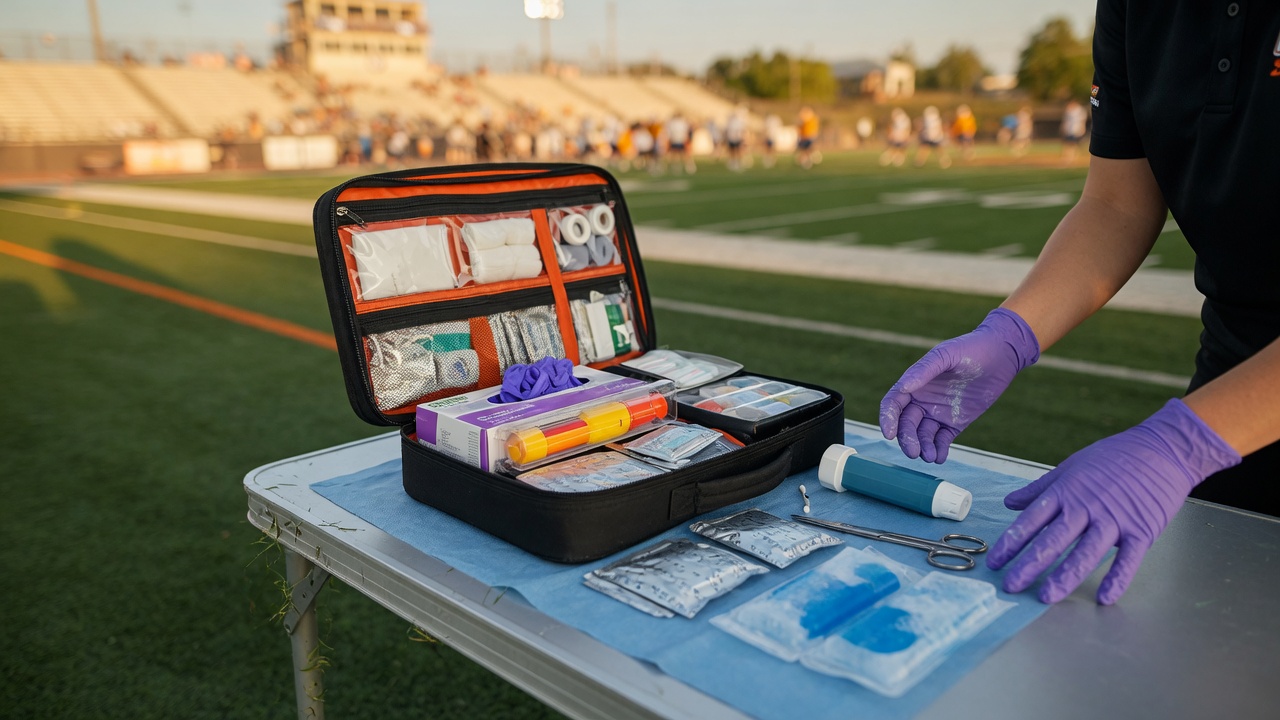
Traditional sideline pain management often relies on oral NSAIDs, acetaminophen, or injectable analgesics requiring IV access, physician oversight, and careful monitoring. Each has limitations in the fast-paced, resource-limited environment of competitive sports.
The green whistle can address most of these gaps. It can be administered immediately at the point of injury, requires no IV access, can provide rapid and effective analgesia, and allows the medical team to proceed with assessment and stabilization without delay.
What Sports Medicine Programs Should Know
- Regulatory status varies by country. Widely available in Australia, New Zealand, the UK and Europe. Not currently FDA-approved in the United States.
- Anti-doping: methoxyflurane is not currently on the WADA Prohibited List. Programs under WADA/USADA or NCAA jurisdiction should independently verify status through the applicable governing body and document clearance before administration in any competitive context.
- Storage and handling: per the manufacturer's package insert, the inhaler needs no refrigeration and has a long shelf life, making it practical for sideline kits and travel bags.
- Training: administration should be supervised by personnel trained in its use, with protocols for physician supervision, documentation, contraindication screening and post-use monitoring.
The SportPharm Perspective
Moments like Ismaël Koné's injury shine a spotlight on what happens in the critical minutes after an athlete goes down. The green whistle is a reminder that international sideline medicine is evolving, and that the tools available to sports medicine teams are expanding beyond the traditional formulary.
At SportPharm, staying current with emerging analgesic options, understanding their evidence base, and ensuring compliant access for athletic programs is core to what we do. Reach out at info@sportpharm.com — we will let you know when Penthrox™ is available in the USA.
Questions about sideline medications?
SportPharm's pharmacists help sports-medicine teams navigate medication options, compliance, and clean-sport considerations.
Talk to a SportPharm pharmacist