You finish a workout, a long run or a weekend game feeling accomplished. Then, a few hours later—or the next morning—something hurts.
Is it normal soreness? Did you overdo it? Should you take a rest day, modify your workout or get it checked?
There is no single sensation that can answer those questions for everyone. Soreness and injury can overlap, and the location of the pain is only part of the picture. What matters is the complete pattern: when the discomfort began, how it feels, whether it changes the way you move and whether it is improving.
This guide will not diagnose an injury. It can help you recognize the details worth paying attention to so you can make a more informed next decision.
First, what does normal post-workout soreness usually feel like?
Delayed-onset muscle soreness—often called DOMS—is a common response to activity that is new, more demanding or different from what your body is accustomed to.
It is especially common after movements that load a muscle while it lengthens. Think about lowering a weight, running downhill, descending stairs or controlling the downward portion of a squat.
DOMS usually develops after the workout rather than during it. Research commonly describes it as beginning about 12 to 24 hours after unfamiliar or strenuous exercise, reaching its strongest point around 24 to 72 hours and then gradually easing over the following days.
Ordinary post-workout soreness is more likely to:
- Feel dull, achy, tender or stiff
- Affect the muscles you challenged during the workout
- Be noticeable on both sides of the body when both sides performed similar work
- Appear later that day or the following morning
- Feel worse when the muscle contracts, stretches or is pressed
- Temporarily reduce strength or range of motion
- Improve gradually instead of becoming more intense
Soreness does not have to disappear before you move again. But it should influence how hard you ask the same tissues to work.
What makes a possible injury feel different?
An injury is more likely to involve a specific structure—such as a muscle, tendon, ligament, joint or bone—and may follow one identifiable movement, impact, fall or awkward landing.
For example, a muscle strain happens when muscle tissue is overstretched and partially tears. Pain, difficulty moving the affected muscle, swelling and bruising can occur with a strain.
A possible injury deserves more attention when the discomfort:
- Began suddenly during a particular movement
- Feels sharp, catching, stabbing or electrical
- Is concentrated in one precise location
- Comes with swelling, bruising or visible changes
- Causes a joint to feel unstable, locked or as though it may give way
- Changes the way you walk, run, lift or bear weight
- Produces noticeable weakness that is more than general muscle fatigue
- Continues to worsen instead of settling
- Keeps returning in the same place when you perform the same activity
These features do not prove that an injury has occurred. They are reasons to stop treating the discomfort like routine soreness and consider a more careful assessment.
Five questions to ask before your next workout
1. When did it begin?
Timing gives you useful context.
Soreness that develops gradually the day after a new strength session fits the common DOMS pattern more closely. Pain that begins immediately during a lift, sprint, jump or fall deserves a different level of caution.
Do not focus on timing alone, however. Some injuries become more noticeable after activity, once the body cools down or swelling develops.
2. Can you point to one exact spot?
Normal soreness often feels spread across the muscle group that performed the work. You may feel it throughout both quadriceps after a squat session or across your upper back after returning to rowing.
Pain you can locate with one fingertip—particularly near a joint, tendon or bone—may deserve closer attention. That is especially true if the area is swollen or the discomfort changes how you move.
3. What does the discomfort feel like?
A broad ache, stiffness and tenderness commonly accompany soreness. Sharp, catching, burning, tingling or shooting sensations are less typical.
The word you use is not a diagnosis. Still, describing the sensation accurately can help an athletic trainer, physical therapist, pharmacist or other healthcare professional understand what is happening.
4. Can you move normally?
Ask whether the discomfort is simply noticeable or whether it is changing your function.
Can you walk without limping? Can you raise your arm normally? Does the joint feel steady? Can you perform a basic version of the movement without compensating?
If your body is forcing you to alter your mechanics, pushing through the full workout is unlikely to be the smartest test.
5. Is the overall pattern improving?
Normal soreness should trend in the right direction. It may be uncomfortable for several days, but movement should gradually become easier.
Pain that is becoming sharper, spreading, returning repeatedly or remaining unchanged deserves another look. The trend often tells you more than one isolated pain score.
Should you train when you are sore?
Sometimes—but the workout may need to change.
If the discomfort fits your usual soreness pattern, gentle movement can help you assess how your body responds. You might reduce the weight, shorten the session, train a different area or choose walking, easy cycling or comfortable mobility instead of another high-load workout.
A useful modification should make the activity more manageable. It should not require you to ignore escalating pain or significantly change your technique.
Consider:
- Lowering the intensity, resistance or impact
- Reducing the number of sets, repetitions or miles
- Choosing a different movement pattern
- Training another muscle group
- Allowing more recovery time before repeating the same session
- Returning gradually as normal movement and confidence come back
Recovery is not an all-or-nothing choice between doing the original workout and doing absolutely nothing.
What if it might be an injury?
Stop the activity that clearly aggravates the area. Repeatedly “testing” the same painful movement can make it harder to understand the pattern and may irritate the area further.
Your next step depends on the severity, location and mechanism of the problem. A primary-care clinician, sports-medicine professional, physical therapist or athletic trainer can help assess musculoskeletal pain and function.
A pharmacist can help you compare pain-relief options and consider your medications, health conditions and other products—but pain relief should not be used to hide warning signs so that you can force your way through a workout.
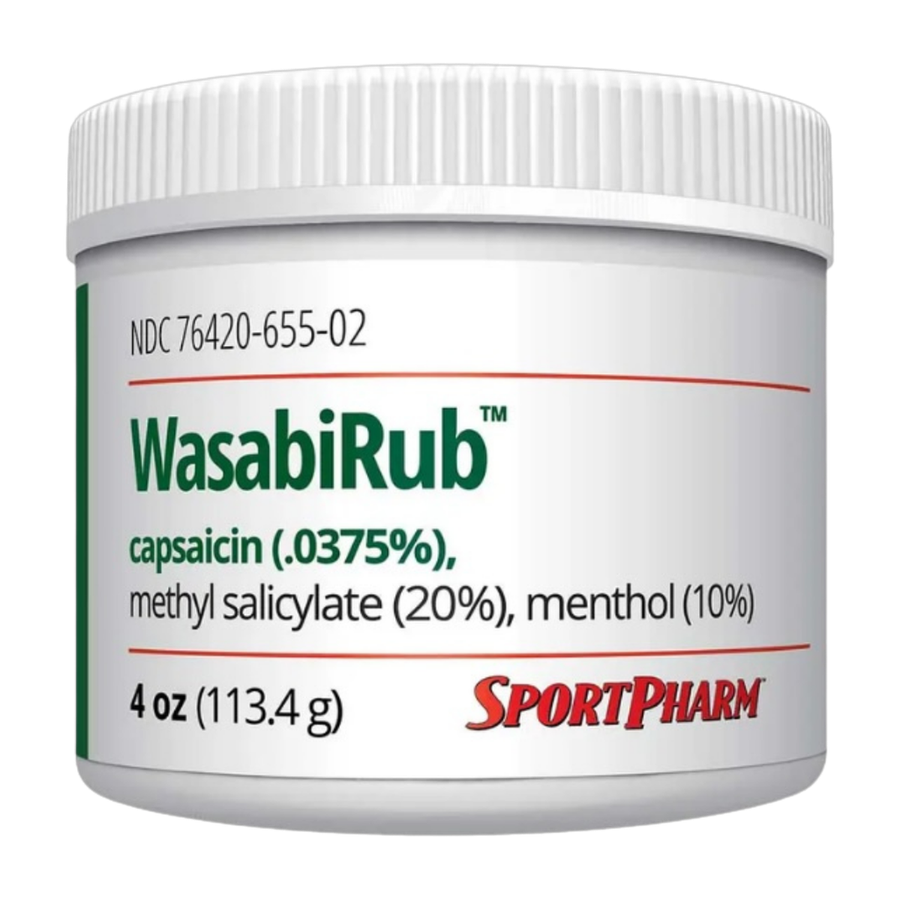
If you use an over-the-counter oral or topical product, follow its directions and avoid assuming that “over the counter” means appropriate for every person. Ask a pharmacist when you are unsure about ingredients, duplicate medications, interactions or how a product fits with your health history.
Warning signs that should not become a wait-and-see experiment
Seek prompt medical evaluation after an injury if you have severe pain or swelling, cannot move the affected area, cannot bear weight, or notice that a joint feels unstable or gave way.
Get urgent medical help for symptoms such as:
- An obvious deformity
- Loss of feeling, significant numbness or a cold or pale limb
- Rapidly worsening swelling
- Inability to move part of the body
- Severe pain after a fall, collision or other trauma
- Shortness of breath, fainting or other symptoms that suggest a broader emergency
Very severe muscle pain after strenuous exercise—especially when combined with unusual weakness or dark, tea- or cola-colored urine—can be a sign of rhabdomyolysis, a serious condition that requires immediate medical attention.
Symptoms can begin hours or even days after the initial muscle damage, and only a healthcare professional can diagnose it with appropriate testing.
When symptoms feel severe or alarming, do not use an online article to decide whether you “qualify” for care.
Why “just push through it” is not a recovery plan
Athletes are often praised for toughness. But useful training depends on interpreting feedback, not ignoring it.
Pushing through discomfort without understanding the pattern can:
- Reinforce altered movement and compensation
- Turn one missed workout into a longer interruption
- Make recurring pain feel normal
- Hide the information that would help a professional evaluate the problem
- Encourage you to use pain relief as permission to exceed your current capacity
The goal is not to become afraid of every ache. It is to respond proportionally.
Some discomfort is part of challenging your body. Warning signs are information. Knowing the difference begins with paying attention.
The bottom line
Normal post-workout soreness usually arrives after unfamiliar or demanding exercise, feels broad and achy, and gradually improves.
A possible injury is more likely to involve sudden or highly localized pain, swelling, bruising, instability, loss of function or a pattern that worsens or repeatedly returns.
You do not have to diagnose yourself before choosing a sensible next step.
If the pattern looks like ordinary soreness, modify your training and allow recovery to do its job. If your movement is changing, the pain is severe or the warning signs are adding up, stop guessing and get the area evaluated.