You do not need to wait until pain is unbearable to ask for help.
An assessment can be useful when you need to understand what activity is safe, why a problem keeps returning, or how to rebuild confidence. The right timing depends on how the injury happened, what symptoms are present, and how much normal function has changed.
Get emergency help now
Call emergency services or go to an emergency department for:
- chest pain, trouble breathing, fainting, or signs of a serious medical event;
- an obvious deformity or a bone that has broken through the skin;
- uncontrolled bleeding;
- sudden loss of feeling, movement, or circulation;
- severe weakness or inability to move;
- a serious head, neck, or spine injury;
- concerning symptoms after a head impact, including worsening headache, repeated vomiting, seizure, increasing confusion, slurred speech, weakness or numbness, decreased coordination, unequal pupils, or difficulty waking.
When a possible concussion occurs in sport, the athlete should be removed immediately and should not return the same day. A healthcare provider should guide return to sport.
Arrange prompt evaluation
Seek timely care when:
- you cannot bear weight or use the area normally;
- pain is severe, rapidly worsening, or associated with significant swelling or bruising;
- a joint gives way, locks, or feels unstable;
- you have numbness, tingling, or notable weakness;
- pain is highly localized over a bone, occurs with ordinary walking, or appears at rest or at night;
- symptoms follow a pop, collision, fall, or other clear injury;
- redness, warmth, fever, or other signs of infection are present.
If you are unsure whether the situation is urgent, contact a healthcare service for triage rather than guessing.
Schedule an appointment for a persistent pattern
Not every assessment is urgent. Make an appointment when pain:
- does not improve with reasonable self-care;
- keeps returning when you resume activity;
- appears earlier or with less effort over time;
- changes your technique, sleep, work, or daily routine;
- has led you to rely repeatedly on pain medication;
- leaves you uncertain about how to return safely.
Early guidance can be especially helpful if you have a history of injury, a medical condition, take multiple medicines, or are preparing for an event with a fixed deadline.
Who should you see?
Primary care
A practical first stop for broad evaluation, referrals, and symptoms that may not be purely musculoskeletal.
Sports medicine
Useful for exercise-related injuries, activity guidance, and coordinated return-to-sport planning.
Physical therapy
Often appropriate for evaluating movement and building an individualized strength, mobility, and return-to-activity plan. Referral rules vary by location and insurance.
Athletic trainer
Athletic trainers can assess sports injuries, provide immediate care, and help coordinate rehabilitation and return to participation in settings where they are available.
Pharmacist
A pharmacist can review prescription medicines, over-the-counter pain relievers, topical products, supplements, duplicate ingredients, and possible interactions. They do not replace an injury examination, but they can make pain-management decisions safer.
Prepare for the appointment
Bring a simple symptom timeline, recent training changes, a list of medicines and supplements, prior injuries, and the specific activities you want to return to. Describe what the problem prevents you from doing—not only the number on a pain scale.
Useful questions include:
- What activities are safe right now?
- What signs mean I should stop or seek more urgent care?
- What should improve before I add load, speed, impact, or contact?
- Could any medication or supplement affect this problem or my pain-relief options?
Bottom line
Get urgent help for emergency warning signs. Arrange prompt evaluation for major loss of function, instability, neurological symptoms, severe or worsening pain, or significant trauma. For a recurring pattern, an appointment is worthwhile before the problem takes more choices away from you.
Continue your pathway
- Not sure whether it is soreness? Read Is This Normal Post-Workout Soreness?
- Need a plan for today? Read Should I Work Out When Something Hurts?
- Want the complete pathway? Return to Push Through or Stop?
FAQ
How long should I wait before seeing a doctor for workout pain?
There is no single timeline. Severe symptoms, major loss of function, neurological symptoms, or significant trauma need prompt care. Pain that does not improve, keeps returning, or affects daily life also deserves evaluation.
Can a pharmacist help with a sports injury?
A pharmacist can help with medication and supplement questions, duplicate ingredients, interactions, and safe pain-relief use. A pharmacist does not replace a physical injury assessment when one is needed.
Should I go to urgent care or sports medicine?
Urgent care may be appropriate when timely examination or imaging may be needed and emergency signs are absent. Sports medicine may be a good fit for non-emergency exercise-related problems and return-to-activity planning. Call ahead if you are uncertain what the facility can evaluate.
Editorial sources
- [CDC HEADS UP: Concussion Signs and Symptoms](https://www.cdc.gov/heads-up/signs-symptoms/index.html)
- [CDC HEADS UP: Responding to a Sports-related Concussion](https://www.cdc.gov/heads-up/response/index.html)
- [AAOS: Stress Fractures](https://orthoinfo.aaos.org/diseases--conditions/stress-fractures/)
- [MedlinePlus: Muscle Aches](https://medlineplus.gov/ency/article/003178.htm)
- [FDA: Using OTC pain relievers safely](https://www.fda.gov/drugs/safe-use-over-counter-pain-relievers-and-fever-reducers/best-way-take-your-over-counter-pain-reliever-seriously-four-panel-brochure)
# Cluster-wide SEO and publishing recommendations
Internal linking
Every article should:
- Link to the Push Through or Stop? pillar in the opening third of the page.
- Link to two or three adjacent articles in context, not only in a “related posts” module.
- Link to the Sports Pharmacy Explained page where medication, supplements, or topical products are discussed.
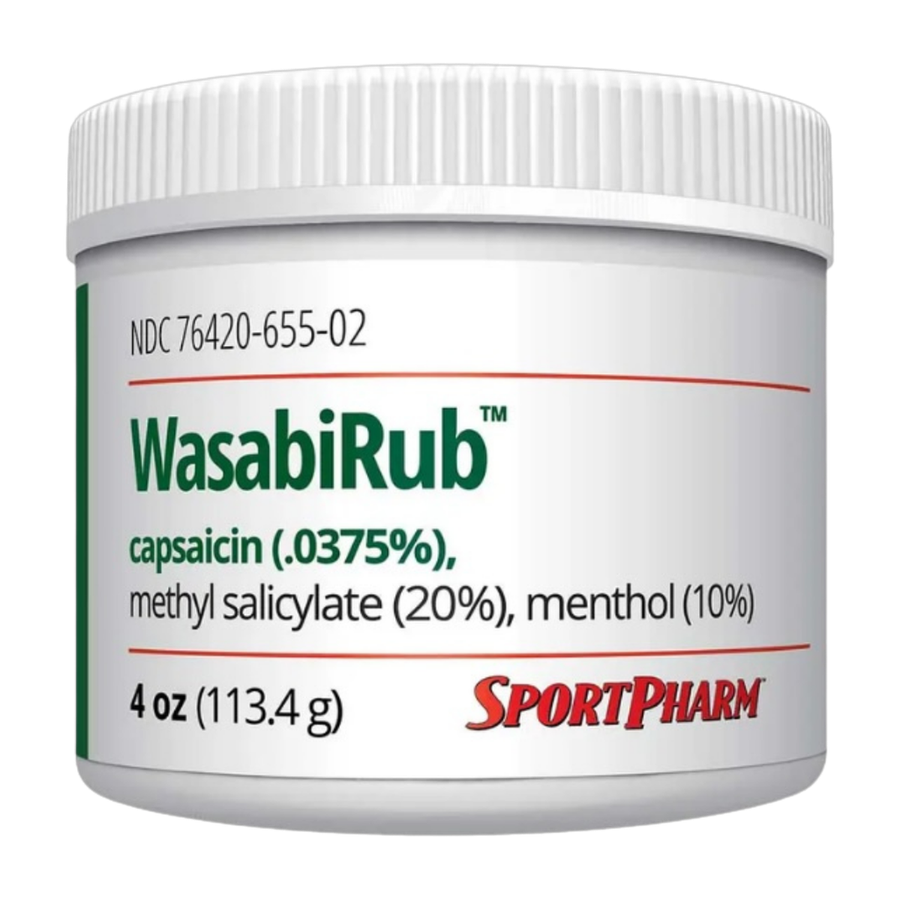
- Link to WasabiRub only where topical pain relief is contextually relevant.
- End with the most appropriate next action: modify activity, read another guide, ask a pharmacist, or find professional care.
On-page structure
- Use one H1 only.
- Preserve descriptive H2s that reflect real search questions.
- Place the direct answer within the first 100 words.
- Add a visible “Reviewed by” line and review date.
- Keep paragraphs short and use lists for decision criteria.
- Add Article and Breadcrumb structured data.
- Consider FAQ structured data only if the FAQs remain visible on the page and current search-engine guidelines support its use.
Recommended trust components
- Named author and credentials
- Named clinical and pharmacy reviewers
- “How we review health content” page
- Sources and last-reviewed date
- Clear distinction between education, pharmacy services, and product promotion
- Accessible emergency notice
- Product claims limited to approved label language
Suggested article-card summaries
- Is This Normal Post-Workout Soreness?
Learn how ordinary muscle soreness often behaves—and which changes mean it is time to pause.
- Why Does the Same Pain Keep Coming Back?
Look beyond temporary relief and identify the training patterns worth changing or getting assessed.
- Should I Work Out When Something Hurts?
Use a simple decision guide to continue, modify, stop, or seek care.
- Why Pushing Through Isn’t a Recovery Plan
Replace the “no pain, no gain” reflex with a strategy built for consistent progress.
- What Does Modifying a Workout Look Like?
See practical ways to adjust load, range, speed, impact, and duration.
- When Is It Time to Get an Injury Checked?
Understand emergency signs, prompt-care signals, and which professional may be a useful starting point.
Global disclaimer
This content is for general educational purposes and is not a diagnosis or a substitute for individualized medical advice. Stop activity and seek appropriate care for severe, sudden, worsening, or otherwise concerning symptoms. In an emergency, call 911 or your local emergency number.