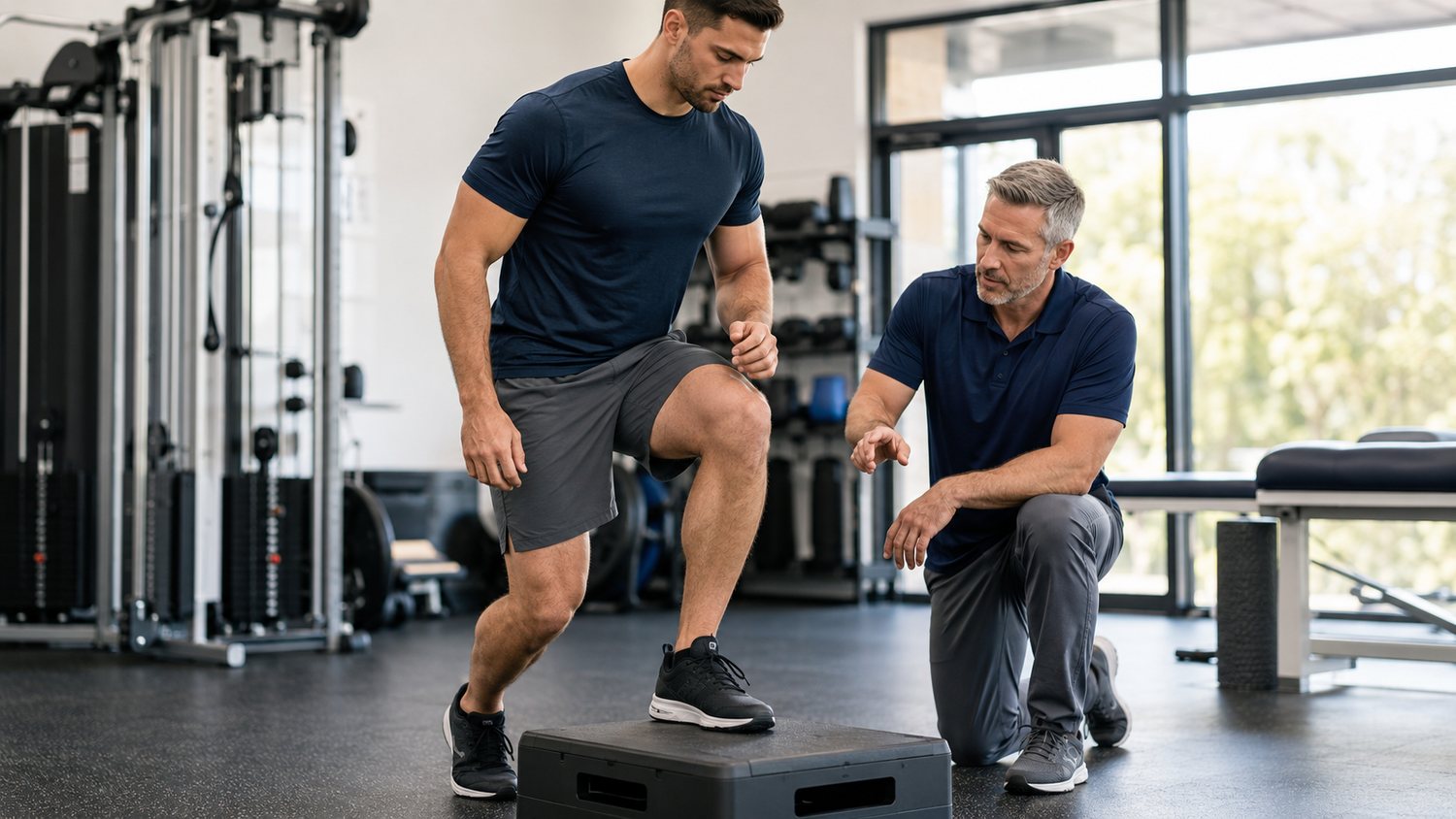
You rest until it feels better. You return to your normal routine. A few workouts later, the same pain is back.
Recurring pain can feel unpredictable, but the pattern often contains useful clues. Rest may calm symptoms without changing the workload, movement, recovery, equipment, or health factor that helped create the problem. When the original demand returns, the symptoms may return with it.
That does not mean you should diagnose yourself. It means the cycle is worth examining.
Relief is not always resolution
Feeling better during a break tells you that reducing the demand helped. It does not necessarily tell you why the area became irritated or whether it is ready for the exact same workload.
Recurring symptoms can be influenced by:
- increasing training volume or intensity too quickly;
- repeating one movement without enough variation or recovery;
- returning at full speed after time away;
- technique that changes under fatigue;
- footwear, equipment, playing surface, or bike setup;
- limited strength, mobility, or control for the task;
- a previous injury that never fully regained capacity;
- sleep, stress, nutrition, medications, or an underlying health issue.
Several factors can be present at once. Generic advice often misses this because the same location can hurt for different reasons in different people.
Track the pattern, not just the pain score
For one to two weeks, record:
- the exact location and type of sensation;
- when it begins—during warm-up, at a certain distance or weight, after training, or the next day;
- which movements increase or decrease it;
- recent changes in volume, load, pace, frequency, terrain, or equipment;
- whether it changes how you walk, lift, pedal, throw, or sleep;
- how long it takes to settle.
This is not a self-diagnosis. It is useful context for deciding whether your plan needs to change and for helping a clinician understand the issue.
Break the repeat-and-rest cycle
A better return is usually graduated. Start below the level that reliably provokes the problem. Change one training variable at a time, then observe the response during the session and afterward.
For example, a runner might reduce distance while keeping the route easy. A lifter might reduce load and range of motion before adding weight again. A pickleball player might shorten play time before returning to multiple consecutive games.
If symptoms return, do not keep escalating. Step back to an easier level that does not increase them. Repeatedly pushing to the same flare point gives you the same information at a higher cost.
When recurring pain should be evaluated
Schedule an assessment when the pain:
- keeps returning despite reasonable changes;
- appears earlier or at lower effort;
- becomes more intense or more localized;
- causes weakness, instability, numbness, or tingling;
- affects walking, sleep, work, or other daily activity;
- follows a significant injury;
- requires frequent medication in order to stay active.
Depending on the issue and your access, a primary-care clinician, sports-medicine clinician, physical therapist, or athletic trainer may be an appropriate starting point. A pharmacist can help review whether a medicine or supplement affects symptoms, recovery, or the safe use of pain relievers.
Bottom line
Recurring pain is not a character flaw and rest is not a complete investigation. Look for the repeatable relationship between symptoms and workload, then rebuild gradually. If the pattern persists or function is declining, get it assessed.
Continue your pathway
- Need a lower-demand option? Read What Does Modifying a Workout Look Like?
- Unsure about today’s workout? Read Should I Work Out When Something Hurts?
- Ready for professional help? Read When Is It Time to Get an Injury Checked?
FAQ
Why does pain go away with rest and return with exercise?
Rest reduces demand on the area, which can reduce symptoms. If the original workload or contributing factor has not changed, symptoms may return when that demand returns.
Does recurring pain always mean an injury?
No. Recurring pain has many possible causes and cannot be classified from one symptom alone. A repeated or worsening pattern is a reason to adjust training and consider an assessment.
Who should I see for recurring workout pain?
The best entry point depends on the problem and your access. Primary care, sports medicine, physical therapy, and athletic training can all be appropriate. Urgent or severe symptoms require more immediate care.
Editorial sources
- [AAOS: Shin Splints](https://orthoinfo.aaos.org/en/diseases--conditions/shin-splints/)
- [AAOS: Hip Strains](https://orthoinfo.aaos.org/diseases--conditions/hip-strains/)
- [MedlinePlus: How to avoid exercise injuries](https://medlineplus.gov/ency/patientinstructions/000859.htm)